






When people think about their roofing, they usually focus on the roof sheets, tiles, gutters, or downpipes. Flashing rarely gets the same attention, but it’s actually one of the most important parts of the entire system; particularly in the case of an irregular roof.
Flashing is what prevents water from entering vulnerable areas where different building materials meet. Without it, even a high-quality roof can develop leaks around chimneys, skylights, wall junctions, valleys, vents, and roof penetrations.
For decades, lead flashing was the industry standard. Recent technological advancements, however, have paved the way for lead-free alternatives such as Fast Flash. In addition to being lead-free, they’ve quickly gained popularity due to their ease of installation, flexibility, durability, and environmental benefits.
So, if you’re dealing with an irregular roof shape, complex penetration, or challenging flashing detail, lead-free flashing may be exactly what you need.
Traditional Lead Flashing and Why Homeowners Are Looking for Alternatives
Lead flashing has been used for generations because it is highly malleable and can be shaped around complex roof details. However, lead-based roofing supplies also come with several important drawbacks. The most notable are:
- Environmental concerns
- Well-publicised health risks
- Heavy and difficult to handle
- Requirement for specialist installation techniques
- Time-consuming to dress into roof profiles
- Not ideal for homeowners wanting a DIY-friendly solution
As roofing technology has evolved, manufacturers have developed modern flashing products that provide the same flexibility without the disadvantages of traditional lead.
Lead based products are also being phased out in other industries. In 2022, for example, the Australian Building Codes Board introduced new requirements for lead-free copper alloys for drinking water, which was a move designed to protect public health.
Why Roof Flashing Matters
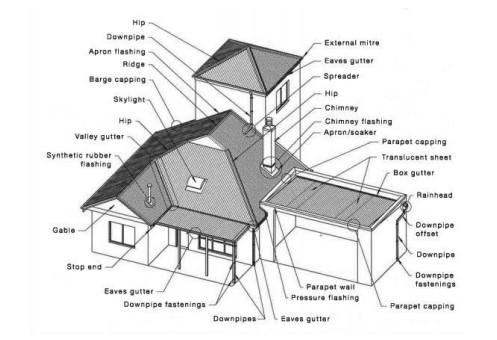
- Flashing acts as a barrier to guide water to the gutters, stopping it from seeping into the most vulnerable parts of a roof: the joints or seams.
- Flashing can be installed around skylights, chimneys, vents, or valleys where the roof changes direction or material. Without proper flashing, you could be left with costly damages.
- Leaks can ruin insulation, cause stains, peeling paint, drywall damage, and electrical problems if it were to reach your wiring.
- Exposure to moisture causes wood to rot ( mould and mildew), which has the potential to cause or lead to health issues.
What Is Fast Flash?
Of the lead-free options on the Australian market, Fast Flash is a clear standout. Manufactured by DEKS, it’s a lead-free, flexible, and self-adhesive flashing designed specifically for difficult roofing applications. It is created using aluminium stretch netting embedded within a flexible polymer rubber compound and incorporates a self-adhesive backing for straightforward installation.
It works well with many roofing materials, including metal roofs, tiles, polycarbonate, concrete, glass, exposed brick, rough concrete, and timber. With its advanced technology, Fast Flash can handle the most challenging roof applications.
Common Applications for Fast Flash
Fast Flash is used around:
Chimneys
Chimneys create one of the most challenging flashing details on a roof because they combine masonry with roofing materials. Flexible flashing can be shaped around brickwork and roof profiles to help create a watertight seal.
Skylights
Skylights interrupt the roof surface and create multiple corners and transitions. Flexible flashing can adapt to these shapes more easily than rigid alternatives.
Solar Panels
The growing popularity of solar installations has increased the need for flashing products that can work around mounting systems and penetrations. Flexible flashing is often used to weatherproof these areas.
Roof Valleys and Junctions
Roof valleys handle large volumes of water during heavy rainfall. Proper flashing is essential to ensure water flows where it should. Flexible flashing products can help seal difficult transitions and intersections.
Wall Abutments
Where a roof meets a vertical wall, flashing prevents water from tracking behind the roofing material. Flexible flashing is particularly useful when walls are uneven or difficult to seal with standard profiles.
Other Flashing Options Available at Roofing Options
Fast Flash is a great option, but there are also a fantastic range of alternatives available. At Roofing Options, we stock it all. Here are some of the best and brightest:
Ridge Flashing
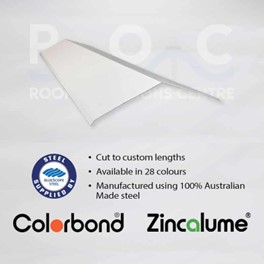
Used at the apex of 2 roof lines to provide a continuous seal and finish along the ridge. The size of the edge break on your flashing should conform to the rib height of the sheet profile to which the sheet is attached.
- Manufactured using COLORBOND® & ZINCALUME® 0.55 bmt
- Custom Lengths up to 8m long
- Total Girth/Widths to 1.2m
- Sold per L/M
Window Flashing
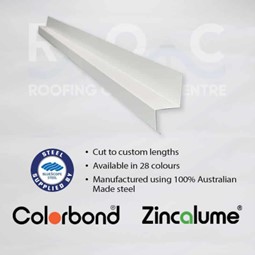
These are custom-made cap, seal and finish building frameworks and external brickwork surrounding windows and potentially external door frames.
- Manufactured using COLORBOND® & ZINCALUME® 0.55 bmt
- Custom Lengths up to 8m long
- Total Girth/Widths to 1.2m
- Sold per L/M
Valley Flashing
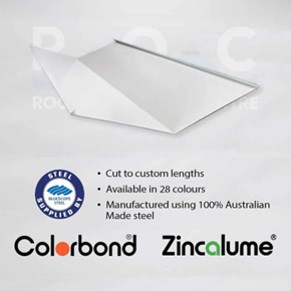
Valley gutters sit between two internal roof slopes angled to suit each pitch, with a return hook fold to minimise the chances of water transferring into your roof space.
- Manufactured using COLORBOND® & ZINCALUME® 0.55 bmt
- Custom Lengths up to 8m long
- Total Girth/Widths to 1.2m
- Sold per L/M
Box Gutter Flashing
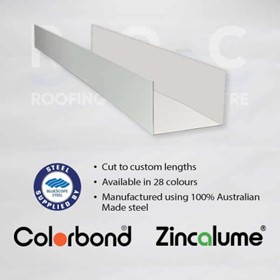
A custom-made square or rectangular gutter that is used within the boundaries of the roof, box gutters need structural support underneath to improve strength and stiffness and to minimise damage caused by roof traffic.
- Manufactured using COLORBOND® & ZINCALUME® 0.55 bmt
- Custom Lengths up to 8m long
- Total Girth/Widths to 1.2m
- Sold per L/M
Barge Flashing
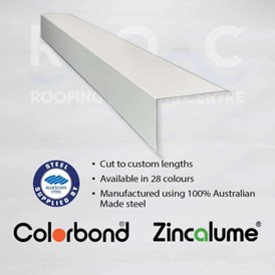
Installed at the junction between a fascia or barge board and roof sheeting, barge flashing conforms with the rib height of the roof sheet profile to which the flashing is attached.
- Manufactured using COLORBOND® & ZINCALUME® 0.55 bmt
- Custom Lengths up to 8m long
- Total Girth/Widths to 1.2m
- Sold per L/M
Apron Flashing
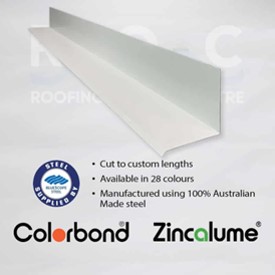
Installed to prevent water from penetrating the juncture where a vertical surface intersects a roof, apron flashing is recommended when the base of the flashing faces strong winds.
- Manufactured using COLORBOND® & ZINCALUME® 0.55 bmt
- Custom Lengths up to 8m long
- Total Girth/Widths to 1.2m
- Sold per L/M
Parapet Flashing
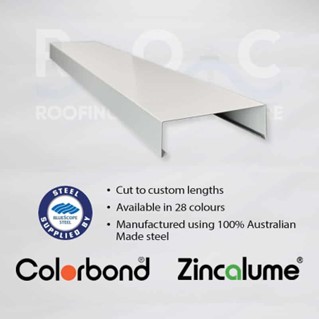
- Manufactured using COLORBOND® & ZINCALUME® 0.55 bmt
- Custom Lengths up to 8m long
- Total Girth/Widths to 1.2m
- Sold per L/M
Order High-Quality Flashing at Roofing Options!
Whether you’re a homeowner, builder, contractor, or a passionate DIY’er, we’re the go-to source for roofing supplies to Frankston, Carrum Downs, Cranbourne, Berwick, Dandenong, Officer, Clyde, Langwarrin, or anywhere in Melbourne.
Purchase Laserlite 2000 & 3000, Palram Sunsky, Sunlite Twinwall, Sunglaze, Ampelite Solasafe, custom made flashings, downpipes & accessories, gutters & metal fascia, rainheads & sumps, or steel roof sheets online drop by one of our stores in Cranbourne, Coburg, or Campbellfield.
We also offer a range of payment options to help get your roofing project started.
FAQs
What is roof flashing and why is it important?
Flashing acts as a barrier to guide water to the gutters, stopping it from seeping into the most vulnerable parts of a roof where joints or seams meet. It is installed around skylights, chimneys, vents, valleys, roof penetrations and wall junctions where the roof changes direction or material. Without proper flashing, even a high-quality roof can develop leaks, leading to moisture damage that can ruin insulation, cause stains, peeling paint, drywall damage, electrical issues, and even wood rot, mould and mildew that may lead to health problems.
Why are homeowners looking for alternatives to traditional lead flashing?
Lead flashing has been used for generations because it is highly malleable and can be shaped around complex roof details, but it also comes with several drawbacks. As roofing technology has evolved, lead-free alternatives have been developed to provide flexibility without these disadvantages, alongside broader industry moves away from lead-based products.
What is Fast Flash?
Fast Flash is a lead-free, flexible and self-adhesive flashing manufactured by DEKS for difficult roofing applications. It is designed for use with a wide range of roofing materials, including metal roofs, tiles, polycarbonate, concrete, glass, exposed brick, rough concrete and timber, making it suitable for challenging roof applications.
Where is Fast Flash commonly used?
Fast Flash is commonly used around chimneys, where masonry meets roofing materials and a watertight seal is required, and skylights, which create multiple corners and transitions in the roof surface.
What other flashing options are available besides Fast Flash?
Other flashing options include ridge flashing, used at the apex of two roof lines to provide a continuous seal; window flashing, used around external brickwork and building frameworks for windows and doors; valley flashing, used in internal roof slopes to direct water flow; box gutter flashing, a custom square or rectangular gutter requiring structural support; barge flashing, used at the junction of fascia or barge boards and roof sheeting; apron flashing, used where a vertical surface intersects a roof; and parapet flashing, also available as a custom flashing option for roof detailing.